ASEAN Data Center Thermal Management & Cooling Innovation Conference 2027
JAN. 20-21 | BANGKOK, THAILAND | IN-PERSON EVENT
JAN. 20-21 | BANGKOK, THAILAND | IN-PERSON EVENT


AI workloads have pushed rack densities from 10–15 kW into 50 kW and beyond, with next-generation GPU clusters approaching 100 kW per rack. This is not an incremental heat load increase but a structural discontinuity that exceeds the heat rejection capacity of conventional air-cooled architectures, especially under Southeast Asia's high ambient temperatures and humidity. Liquid, immersion and hybrid cooling introduce new constraints in hydraulic design, condensation control, retrofit and operational competence. Efficiency metrics and life-cycle cost assumptions built for air-cooled facilities no longer hold. The AI Density Shock defines the thermal engineering boundary within which the region's AI-ready capacity will be determined.
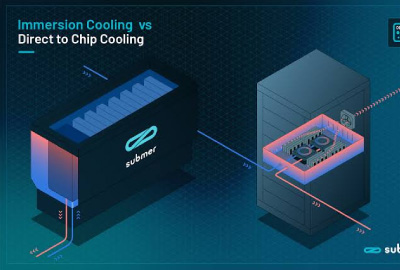
Direct-to-chip (DTC) liquid cooling has moved beyond pilot deployments into production environments, driven by rack densities that air cooling can no longer support. Cold plates attached directly to high-power processors capture heat at the source, enabling higher density, lower PUE and improved thermal stability. Yet tropical deployment introduces constraints rarely addressed in temperate case studies: elevated ambient temperatures, humidity-driven condensation risk, coolant quality management and leak detection. CDU integration, hydraulic topology and serviceability further complicate retrofits of existing facilities. This theme examines DTC liquid cooling as an engineering discipline rather than a product category — covering heat capture efficiency, deployment data from Southeast Asian facilities, and the operational practices required to run liquid-cooled infrastructure reliably at scale.
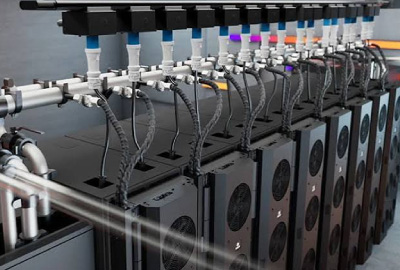
Coolant distribution units (CDUs) are the physical and hydraulic interface between liquid-cooled IT equipment and facility infrastructure, yet their integration is consistently underestimated in planning. CDU selection determines flow rate, pressure differential, redundancy topology and heat rejection strategy — decisions that cascade through the entire cooling loop. Retrofit scenarios expose the hardest constraints: floor loading, pipe routing, power distribution, spatial allocation and maintenance access. In tropical environments, condensate management and coolant temperature control add further complexity. Redundancy design must also account for pump failure modes and isolation procedures without compromising IT availability. This theme addresses CDU integration as a system engineering problem — covering hydraulic topology, resilience architecture, retrofit pathways and the practical lessons from 50 MW+ deployments across the region.
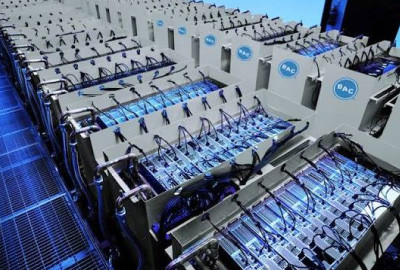
Immersion cooling and hybrid architectures represent two distinct responses to rising thermal demand. Immersion systems submerge servers in dielectric fluid, achieving high heat capture efficiency and near-silent operation, but raise questions around fluid management, maintenance access and component compatibility. Hybrid designs combine air and liquid cooling within a single facility, allowing operators to support both conventional and high-density workloads without a full infrastructure overhaul. In tropical environments, both approaches face specific constraints: fluid degradation, condensation control, and the need to balance efficiency gains against capital cost and operational complexity. Neither is a universal solution — each fits a particular density profile and deployment scenario. This theme examines immersion and hybrid cooling through field data and operator experience, separating demonstrated performance from vendor claims and clarifying where each architecture delivers genuine value across ASEAN's mixed-workload facilities.
Cooling designs validated in temperate data centers do not transfer directly to Southeast Asia. Sustained high ambient temperatures, elevated humidity and seasonal monsoon conditions alter thermodynamic performance, condenser efficiency and condensation risk in ways that standard design assumptions fail to capture. Tropical engineering addresses these conditions as first-order design variables rather than corrections. Refrigerant selection, heat rejection strategy, humidity control and part-load behaviour must all be evaluated against local climate data. Regional standards — including Singapore's IMDA work on liquid cooling in tropical environments — are beginning to formalise requirements that were previously left to individual engineering judgement. This theme examines the engineering fundamentals of cooling in high-ambient, high-humidity conditions, covering thermodynamic limits, design modifications, standards development and the operational experience emerging from ASEAN deployments.
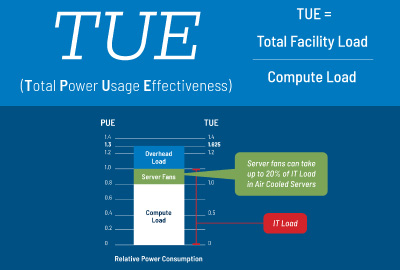
Cooling system failures remain a leading cause of unplanned data center outages, yet resilience planning frequently prioritises power infrastructure while treating thermal systems as a secondary concern. Pump failures, coolant leaks, control system faults and sensor drift each present distinct failure modes with different detection and recovery profiles. At the same time, the metrics used to evaluate cooling performance are evolving. PUE alone no longer captures the operational reality of high-density, liquid-cooled facilities. Water usage effectiveness, carbon usage effectiveness and the emerging concept of thermal headroom are gaining traction as measures of both efficiency and AI readiness. This theme examines thermal resilience as a design discipline — covering failure mode analysis, redundancy architecture and predictive maintenance — alongside the metrics that increasingly determine how cooling performance is specified.
Main Conference
Sub-Streams
Buffet Lunch
Documentation Package
Main Conference
To know more Brands
3 One to One Meetings
Known by 200+ Delegates
Reported by all Media Partners
Main Conference
Standard Exhibition Booth
3 One to One Meetings
Sub-Streams
Documentation Package